
With summer and the school holidays around the corner, now is the time for a pool safety check. Here is what every NSW pool owner needs to know, in plain English.
As the weather warms, pools get busier, with more visitors, more children and more time in the water, so it is worth a quick check before the season starts. If you own a pool in NSW, three things matter: register it, keep a compliant barrier around it, and hold a current certificate of compliance when you sell or lease. None of it is difficult once you know the steps, and a well-designed pool makes the barrier a beautiful part of the garden rather than an afterthought.
Under the Swimming Pools Act 1992, pool owners must register their pool on the NSW Swimming Pool Register.
It is free and takes only a few minutes online, and you will receive a certificate of registration. You can also use the register to check whether a pool has already been registered. Spas count as swimming pools under the Act, so they are included.
The owner must make sure the pool is surrounded at all times by a child-resistant barrier that is built, installed and maintained to the prescribed standards. In practice, that means a barrier immediately around the pool, gates that close and latch properly, and no easy climbing points nearby. The detailed requirements are set out in the Australian Standard and in NSW guidance, and they depend partly on when your pool was built.
A barrier is required for any pool capable of holding water 300 millimetres deep or more, which includes portable and inflatable pools. A spa does not need a full barrier if access is restricted as the standards require with a lockable cover.
A certificate of compliance shows that your pool barrier met the standards when it was inspected. It is issued by your council or a registered pool certifier, and is valid for 3 years.
You need a current certificate, or a relevant occupation certificate, in two situations: when you sell a property with a pool, where it must be attached to the sale contract, and when you lease one, where it must be attached to a new tenancy agreement. Your pool must be registered before the certificate can be issued. If the barrier does not comply, the inspector will give you a certificate of non-compliance and a list of what to fix.

Making safety beautiful
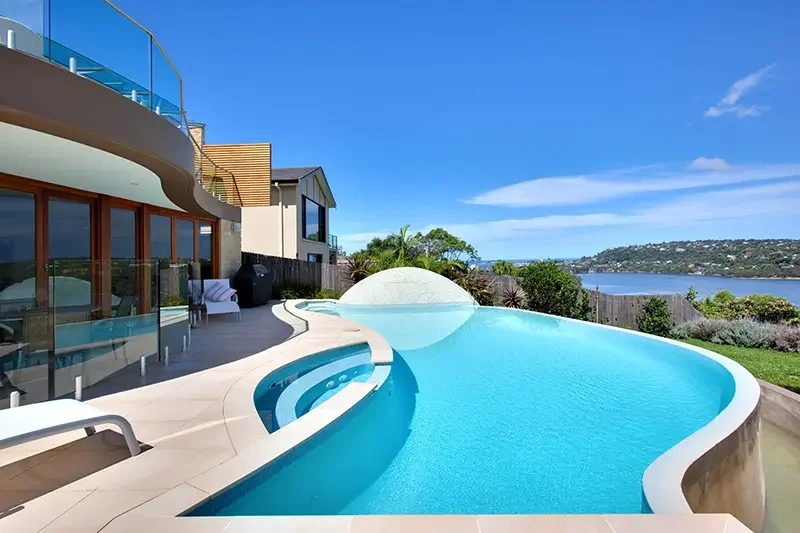
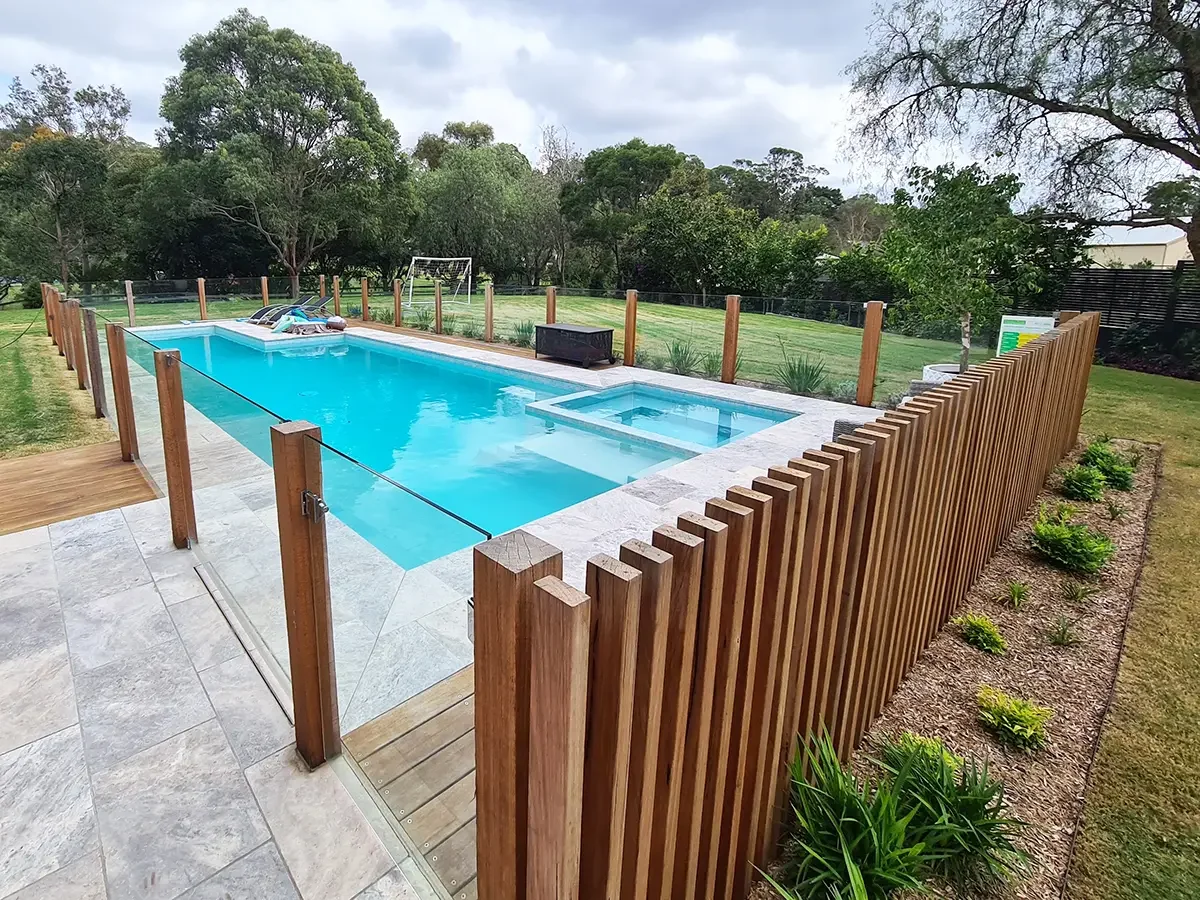
Compliance does not have to compromise design. Frameless glass, slim aluminium and carefully planned landscaping can all meet the standards while keeping views open and the garden elegant. The key is to design the barrier together with the pool, so it fits the plan from the start.
A builder’s note:
We plan the barrier, gates and access paths at the design stage, not after the pool is built. It means fewer surprises at inspection and a cleaner result.
Quick checklist
Register your pool, or check that it already is, at the NSW Swimming Pool Register.
Regularly, test that your gate closes and latches by itself, every time.
Keep furniture, planters and climbable objects well clear of the barrier.
Display a resuscitation (CPR) sign and keep it legible.
Diarise your certificate's three-year expiry, or book an inspection before you sell or lease.
Requirements vary with your pool's age and type, so confirm the details for your property with your council or the NSW Government's pool safety information.
Your next step
We have put together an owner's checklist that you can keep by the back door. Get in touch and we will send you a copy.