
How much does a concrete pool cost in Sydney?
Building a concrete pool is one of the most significant investments a homeowner can make in their property – and one of the questions we're asked most often is simply: what will it cost? The honest answer is that there's no single figure that applies to every Sydney backyard. Price is shaped by site conditions, design complexity, and the finishes you choose. This guide breaks down exactly where your money goes, so you can budget with confidence and avoid surprises once construction begins.
The Short Answer:
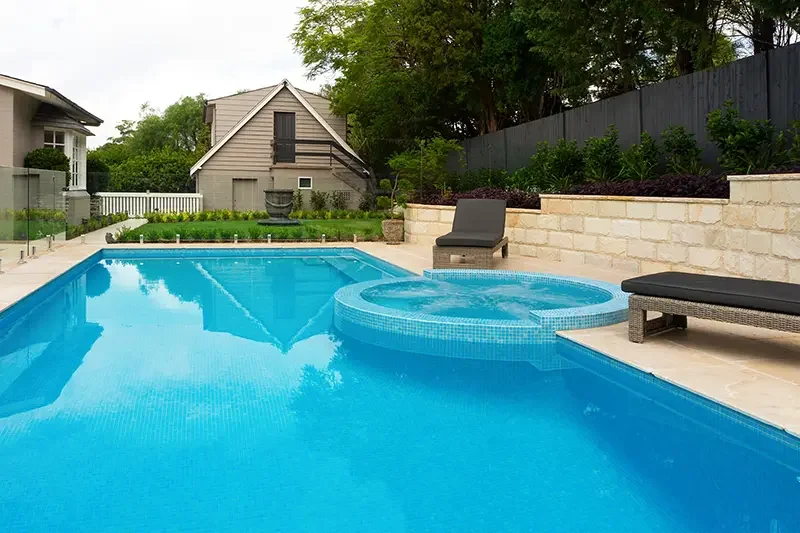
In the current Sydney market, a fully installed concrete pool typically costs between $80,000 and $150,000+. Entry-level pools on flat, easy-access blocks sit at the lower end of this range, while larger pools, complex shapes, premium finishes, and challenging sites push costs well beyond $150,000. Any builder who quotes a fixed price without inspecting your site should be treated with caution – accurate pricing is only possible once ground conditions and access have been assessed.
Why concrete pools cost more than fibreglass
Concrete pools are built in place, bar by bar of steel reinforcement and shotcrete, rather than dropped in as a pre-formed shell. This custom construction process is inherently more labour-intensive than installing a fibreglass shell, which is part of why concrete pools typically carry a higher price tag. In exchange, you get complete design freedom – any shape, any depth, any size – along with a structure engineered to handle Sydney's reactive clay soils and decades of use. For many owners, that trade-off is well worth it.
The factors that actually drive your price
1. Site access and excavation
Site access is, in our experience, the single biggest cost variable in Sydney pool builds. A block with clear wide side access for excavators keeps costs down. A tight inner-city terrace, a steep block, or a backyard reachable only via a crane over the roof can add tens of thousands of dollars before a single tile is laid. Rock encountered during excavation – common across parts of Sydney's sandstone belt – also adds cost, since it often requires specialised rock-breaking equipment or additional excavation time.
2. Soil conditions
Sydney's geology varies enormously from suburb to suburb, ranging from stable sandstone to highly reactive clay or sand. A geotechnical report determines the footing design and structural engineering your pool requires. Sites with reactive clay or a high water table typically need more robust engineering solutions than sites on stable ground. A report is not compulsory (except for some council areas) but does assist in budgeting.

3. Pool size and shape
Pool designs with additional depth changes, built-in spas, swim-outs, and beach entries all add labour and formwork complexity, which is reflected in the final price.
4. Interior finish
The interior surface is one of the more visible cost decisions you'll make. Pebble and glass bead finishes remain the most popular choice for Sydney pools, offering durability and a natural look at a moderate price point. Fully tiled interiors sit at the premium end of the market, offering a striking, glass-like finish but at a noticeably higher cost per square metre.

5. Equipment and features
Filtration and sanitisation equipment form part of every quote, but the specification level varies widely. A standard single-speed pump and basic chlorinator will cost less upfront than a variable-speed pump, a mineral or salt system, pool automation, heating, or LED lighting upgrades — all of which lower running costs or improve usability over the life of the pool, even if they raise the initial spend.

6. Decking, fencing and landscaping
It's worth noting that most quoted pool prices cover the shell, interior finish, coping, and equipment — not the surrounding decking, paving, landscaping, or pool fencing. These items are frequently quoted separately and can add a substantial amount to your total project cost. Under the NSW Swimming Pools Act 1992, compliant fencing is mandatory, so this is not an area where corners can be cut.

What a typical quote should include
When comparing quotes from different builders, look closely at what's actually covered. At minimum, an itemised quote should specify:
Excavation and site preparation
Steel reinforcement and shotcrete/ shell
Interior surface finish
Pool coping
Filtration, pumping, and sanitisation equipment
Plumbing and hydraulics
Compliant safety fencing
Anything not listed — heating, automation, decking, retaining walls, landscaping — should be clarified explicitly before you sign. This is where many homeowners are caught out, discovering mid-project that items they assumed were included have been quoted as extras.
A word on ‘Too good to be true’ quotes
Sydney's pool building industry, like many trades, has its share of quotes that seem remarkably low compared to the market. In our experience, these figures are rarely wrong by accident. They typically exclude site works, use minimal equipment specifications, or omit compliance items that will need to be added later at additional cost. A properly considered quote, based on an actual site inspection and geotechnical assessment, will always be more reliable than a ballpark figure given over the phone.
Getting an accurate number for your project
Because so much of the final cost depends on your specific block – its access, its soil, its slope, and your design brief – the only way to get a genuinely accurate figure is through a site visit and a detailed consultation. A qualified pool builder should be able to walk you through where your budget is going, explain any site-specific risks upfront, and provide a clear, itemised contract before work begins.
If you're planning a concrete pool in Sydney and want a costing that reflects your actual site rather than a generic estimate, get in touch for an obligation-free consultation.
Simply click the button below to contact us.
This article provides general information current as at the time of publication. Costs, regulations, and industry standards may change – always confirm current requirements with your builder and local council.